by Vannie Gama
One of the reasons I have dedicated myself so intensely to theoretical research and writing in general over the past four years — and probably for as long as it is physically possible — is the understanding that, historically, text plays an indispensable role in the ongoing development of society. When we stop to study any social phenomenon, it is common to use network theories, system theories, structures, circuits, topographies, ecosystems, and other frameworks that consider the dynamism of different actors, agents, environmental conditions, and their differentiations precisely because of the complexity of the public sphere, whether digital or “physical”. These theories within the social and human sciences allow us to work collectively, methodologically, to understand the extent of the particularities of what, once understood, enables us to develop strategies to properly “deal” with the applicable substance of what we observe.
For example, it is evident that education is a cellular topic for any society, but education is, above all, a word that holds certain meanings depending on context and scope: education of what, where, how? Public policy, cultural health, ecology, infrastructure — these are, in themselves, topics that touch on education from some angle. This means there is no room for monodisciplinary thinking when learning about any given segment of society. Art is no different. There is no such thing as Art for Art’s sake — or rather, it exists in the same way we can imagine mythological beings we have never seen in materiality, in the pragmatism of the sensory world. The world of ideas has its particularities, coexisting within the diversity of possibilities in which words hold their transient and translatable meanings.
I once loved art, before understanding that it was not something external or internal that could be circumscribed within my existence. In other words, to love is a word that denotes an emotion toward a thing (or a set of things, of events), and this means that there is differentiation between that emotion and others. It can certainly coexist with other emotions, but it is not totalizing, for if it were, it would not be used as this “special” and hierarchically superior quality in relation to other emotions: to say that we love divides what is loved from what is not, and in every language we have other verbs and adjectives to grade the intensity and the sovereignty or omnipresence — for that kind of universal love — of “love”, just as we do for other extremes, like hate. I am particularly drawn to philosophies that dwell on the contradictions and hypocrisies of the world of emotions and values, of the relations between subject and object, me and the other, our ideals protected at all costs with a kind of futuristic medieval Manichaeism.
But returning to the question of loving art: I no longer love art, because I no longer see it as something separable, distinguishable, something I can color with a pigment different from my neighbor’s. I had to break the idea of art into different sectors, just like the very philosophies of love and hate, in order to make sense of loving it or not. It is not a love of eros, nor a universal love. I love the fraternity of art, but I do not love art, because its idea is, at its core, a language, simply. It is language that guides human freedoms — and as I have said in other texts, that does not mean autonomy — through almost infinite codifications within its other languages. Like a linguistic tree, a class within the vegetal kingdom, art has a diversity that leads to an analogous end within that diversity. Its seed sprouts, some more or less distant from the point of origin, more or less long‑lasting; some are clones, others do not even repeat the colors of their own flowers; some are more or less hybridizable with their neighbors, more or less resistant, and so on.
Text is one of those artistic forms that function as the phloem of this vegetal kingdom of Art. Text, here, is not reduced to any specific format, but signifies the use of the word, whether for organization, translation, or record. Understanding ancestry, I also see text as the child of the word, of oral tradition. Never from a positivist perspective, in which text is technically superior to spoken language, but rather the opposite: text as proof of the loss and absence of our capacity to retain memory without materialization. Text is not absolute, nor is the word. Nothing is. In modernity, I therefore hold on to the phloem of text, which in the past certainly had another form. Even today, xylem remains the spoken word: if we now live in the twilight of war, it is through the word, because nothing is more valuable than the bond between the world of ideas and lived experience, and the way this bond is articulated is where culture exists, where love has meaning, as does hate, as does art.
Art, then, is not something I love, but I love its manifestation. And I will defend it, as the artistic community of today and yesterday has done, regardless of the code it uses. I find it curious, however, how the idea and form of art live out this satire of form. It is distant, almost untouchable, while at the same time obscene, raw, so touchable that at times it becomes indistinguishable from the being, from the environment. Its freedom is an object of admiration and disgust; it gains places of prestige and stage, while it can also be censored to the point of implosion. The message is never clear, and it is these blurrings and metamorphoses that project it as a vital necessity. It is, fundamentally, questionable. This openness does not mean a place that contains an exit, because it is not traversable in the same way that it is permeable. Why do I say all this in such an unbearably prolix way? Because it can be understood like this, just as it is present in an incredibly mundane way, since the bond we speak of as so precious is the medium of society itself.
Moreover, art is a social phenomenon, and its translation occurs as it is carried by the individual or by individuals into the space of another. There is no such thing as “a world of ideas” and a “material end”, because dimensions and temporalities vary, and perhaps only a photograph — the static retention of a moment within this dynamic — could explain it, not by reducing it but by acknowledging the “sample”. The defense of aristocratic, otherworldly art is nothing more than a fantasy of power that proclaims hatred for the human being, for refusing to let them be the author of the very potentiality — not fully explicable — that constitutes a good work of art. Tear down all the angels and break their halos: Hegel is a complete pope in his attempt to maintain the sacrosanctity of art. Heretic Liberation is art’s washable colors.
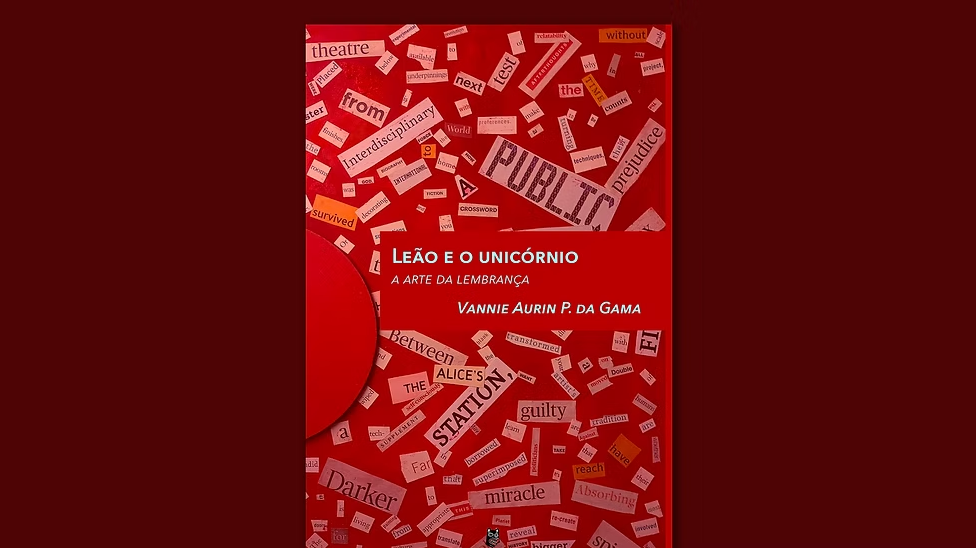
Leão e o Unicórnio: a arte da lembrança | Editora Libertinagem
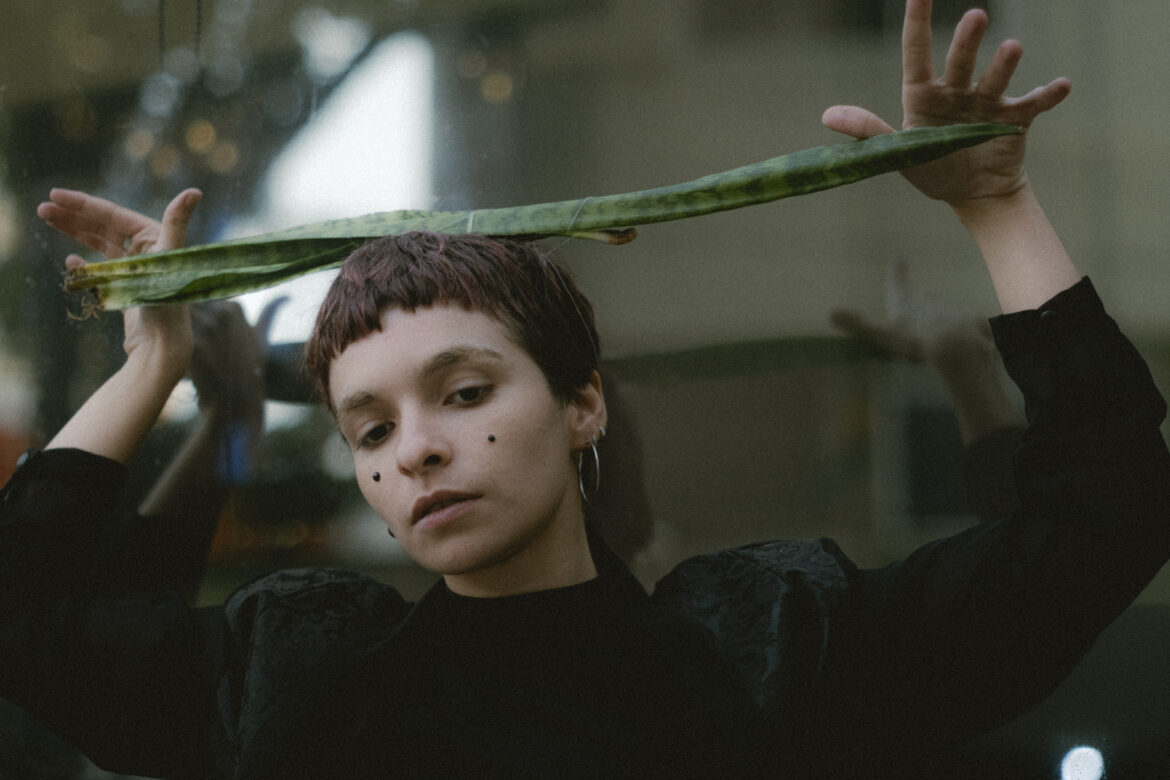
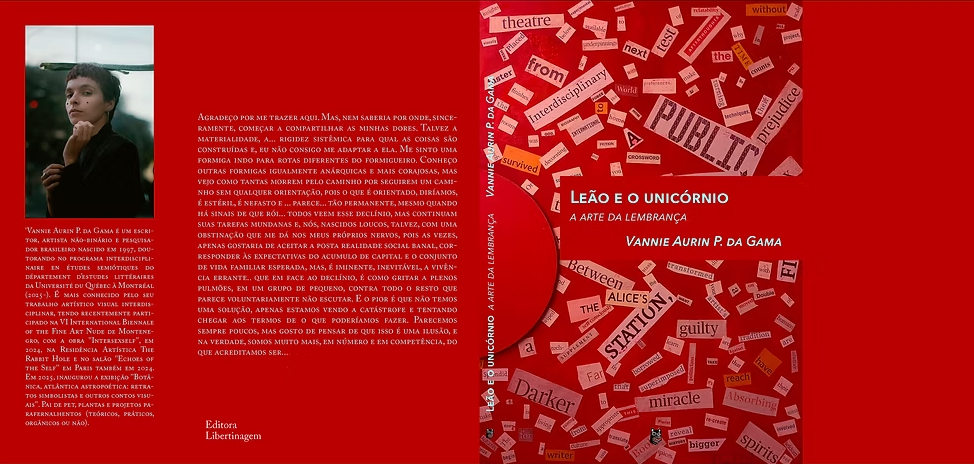
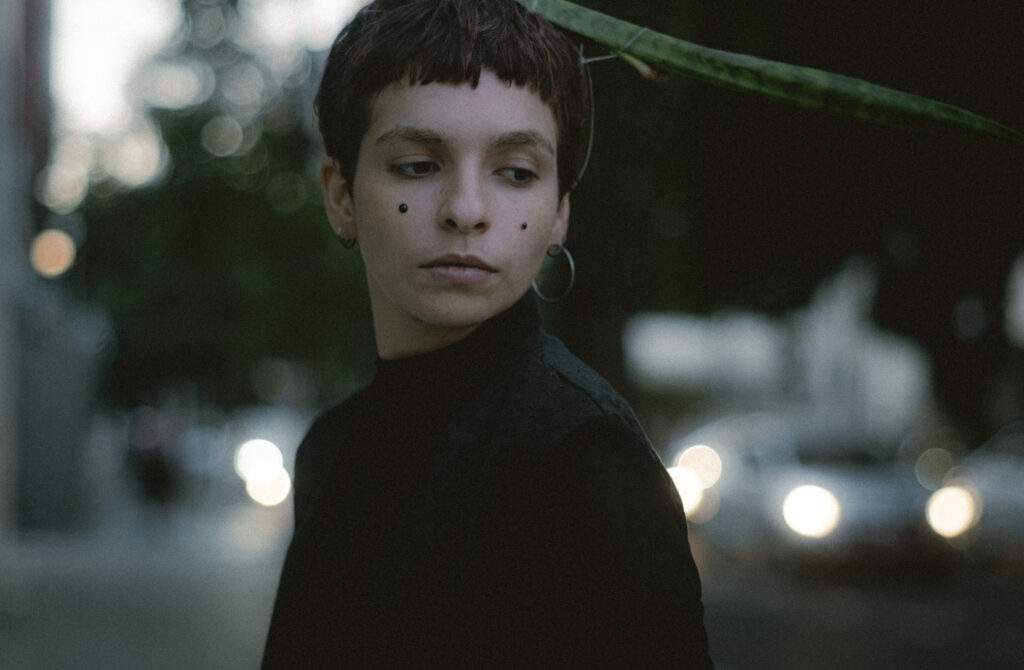
I want you to keep this in mind when you read O leão e o unicórnio, my first work of artistic fiction, just as I want you to keep it in mind when you see collaborative works, because it is with this background that I go — and that I went — when I created, for example, a photoshoot and a video‑art‑with‑tones‑of‑fashion‑film in 2023 with Henrique Nakandakare, an audiovisual artist. I kept thinking about how to present this material to you. Evidently, if you are reading this English version, you may wonder why I am talking about a book whose first edition is in Portuguese, and about a video‑art piece and photoshoot from almost three years ago. First, it is always good for us to learn other languages; second, O leão e o unicórnio will have an English translation in 2026; and third, because the back cover of the book features a portrait made in 2023, for reasons I would like to explain later on. An additional reason is that the book is an artistic fiction, since it is a book in which the main character speaks with artworks, but also speaks about art with the people and beings around them.
Many of the dialogues in the book are, as is no mystery to anyone, inspired by conversations I had “in the world of non‑fiction” with people who also perceive art as this guiding thread for the ideas of freedom in our time: recognizing the unfortunate and unhealthy political conditions of this first quarter of the century, speaking openly about the rise of totalitarian regimes and the destruction caused by a capitalism that can, in fact, strip most people of the very imagination of a world without it, leaving them unable to distinguish it from any future of other possible forms of life in society. And although it is a work of fiction, we live, as artists, our realities. As you know, the goal is not to produce cheap propaganda for you. In fact, I believe this book belongs to the lineage of those we read from past wars in history: how the atmosphere felt, what questions surrounded us. The artistic community always mobilizes. In the real world, collaborations also exist beyond conversations between friends. The book is also written in first person, showing my passion and inspirations in Hemingway’s work, particularly in his ability to be absolutely political, while writing the most mundane events and characters.
I met Henrique when I was doing the Visual Arts bachelor, and he had just quit Physics. We had a shared passion: astronomy – and a lot of existential questions. That was what brought us together at first. We were in our early twenties, and although it felt like we had our whole lives ahead of us, we already had some awareness of the importance of the present, back then in the 2010s. We were, however, ignorant of social issues. Classic cheap would‑be intellectuals, what mattered were the inventions, the conversations, the authors, the theories, and above all, everything we disagreed with in the world. I met some of his friends at the time, equally inventive, equally hyper‑focused. Around then, Henrique was beginning to photograph, and I was beginning to deepen my work in painting; I had not yet written about the artworks, and I didn’t know what to do after finishing a composition. I wrote about Henrique’s work in my first book, in the collaborations section, in “O Cultivar das Imagens”, from 2021–2022. It was during the pandemic, and we were beginning to work together and finally understand our place in the world in a conscious way: the covid‑19 years forced the artistic community to organize itself somehow. At that time, from my perspective as a friend, it was when he immersed himself in the world of audiovisual work and consequently in cinema.
We were both rooted in DIY practices, with our political awareness blossoming thanks to our different circles of friends, and we began to engage artistic creation alongside the expression of social rights, anti‑systemic yet still grounded in our local realities. As a curious detail, as collectors know, all works purchased directly from the atelier are presented in a very specific way: beyond any packaging, they come wrapped in raw, natural, or muted‑tone fabrics, hand‑stitched on all sides. This “ritual”, a signature of the atelier, began with a specific artwork: “Supernova”, from 2019, gifted to Henrique that same year. The stitching prolongs the time of appreciating the relationship between us and the material, and it is something very present in his audiovisual work, which values the details of everyday life, just as it is something I value in visual proposals, which are few each year, preserving their depth and conceptual and compositional intention. It shows care and, above all, requires the action of another person to be revealed; deciding how to open that stitching, how to relate to that new object — it is not mere packaging. I notice that Henrique does something analogous in his videos, with introductions that stir and warm the eyes and attention, instead of arriving in cheap packaging, with industrialized openings and proposals that require no effort of “synchronization” from the viewer.
O que é Valor para VOCÊ? – YouTube
In 2023, I created the series and solo exhibition “Prologues for Organic Observations”. After “Cube‑Raum”, my first solo exhibition, “Afigurations of Time”, it was in Prologues that I created the installation “Eternal Mutualisms”, which, together with Cube, is the second most important of my works so far, both conceptually and formally. Prologues was made as an ecological outcry, and it was while writing this very text that I realized I had never written a “complete” material about the series. 2023 was such an intense year of creation and exhibition — not only for this series but also for other academic writings that were published the following year, 2024 — that I never stopped to write, in detail, about each work. I made a page on my old website, and I mention it briefly in the “Handbook” catalog, but without further explanation — which leads me to the next text after this one, where I will give you details about this series that weaves together philosophical questions on interspecific relations, human‑in‑nature dynamics, environmental memory, territory, and the unsustainable cycles of anthropic actions from a critical perspective on the carboniferous (supported by Haraway’s writings).
As it was an essential series, much more grounded in the field of social sciences — especially because I was immersed in my master’s program, which was precisely about ecosystems, culture, and technology — the presentation of this series became something somewhat ritualistic, something I knew I should not do alone. Whether or not we are living through years of crisis, we never do anything alone, but in critical times the need for teamwork becomes overwhelming and unavoidable. At the time, Henrique was not only a great friend to me, but someone whose intellectual and ethical bond — even with our heated discussions — I felt I needed to rely on to be part of the series. This bond was so genuine, typical of the connections between artists throughout history, that the creations did not need to be strict. On my side, there was an almost absolute trust in the collaboration of his gaze, the gaze of an urban photographer with deep roots in identity and in the experience of the world (his own world and his relations with the surroundings). And so, to be honest, I do not even remember how the idea for “The Prologue of the Prologue” emerged, a video art piece we created together during a photoshoot in Campinas, in the state of São Paulo, Brazil. I created two sets of clothing and a mask, accessories of that kind, and went. I remember having some ideas at first, which gradually dissolved or transformed as we created together. Our differences were never complementary, but they were always emphases of artistic resilience, fuel for movement — even if minimal — within local revolutions.
Le prologue du prologue | Short Film Fuji X-T3 – YouTube
After we shot the Prologue and he created its final form, he complementarily shared his side of the creative process at the time in several very detailed videos. On my side, I never stopped to talk about it. As I said earlier, I do not love art, because I learned that it is also essential in some bodies. I do not need to incorporate it, because once again, art is neither eros nor platonic; it is not a state that responds to any kind of calling. In me, art is unfortunately like a microfauna on the skin, like the marrow running along my spine, like the adenosine in my brain. Art is meteorological, but water is water, and if it is not in the form of a terrible storm, it is trapped in the poles, in the groundwater of our existence. When I create a series, Earth becomes Neptune, and it is impossible to anchor myself on any other small island until it quiets its cycle. The performance I created for Henrique’s work was, in the end, a part of the process that was already unfolding in the artworks of the series and in the dissertation.
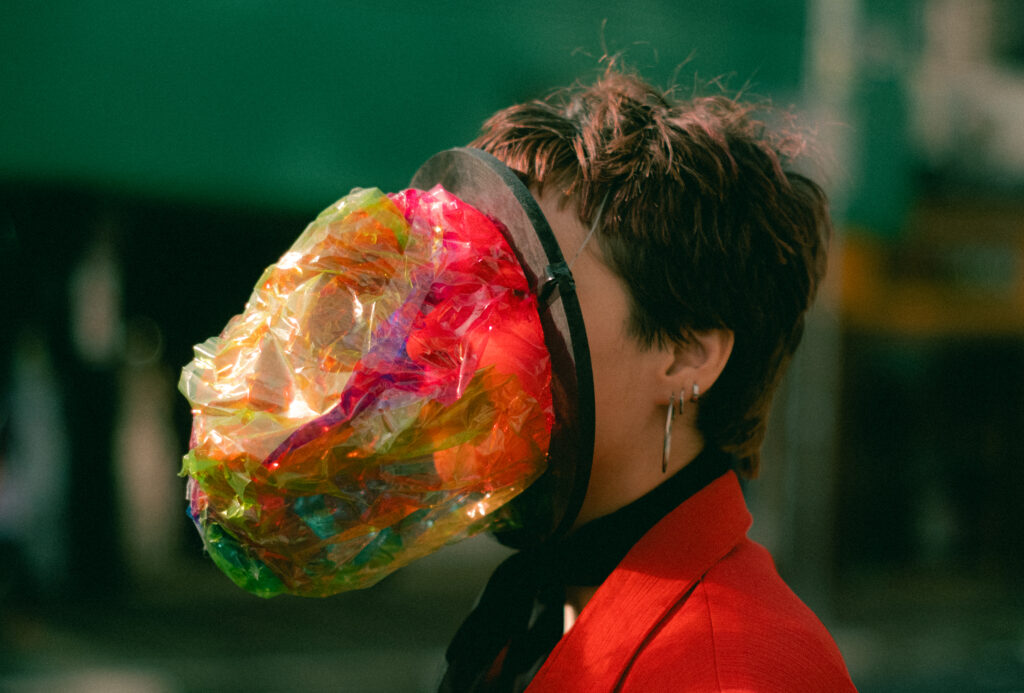
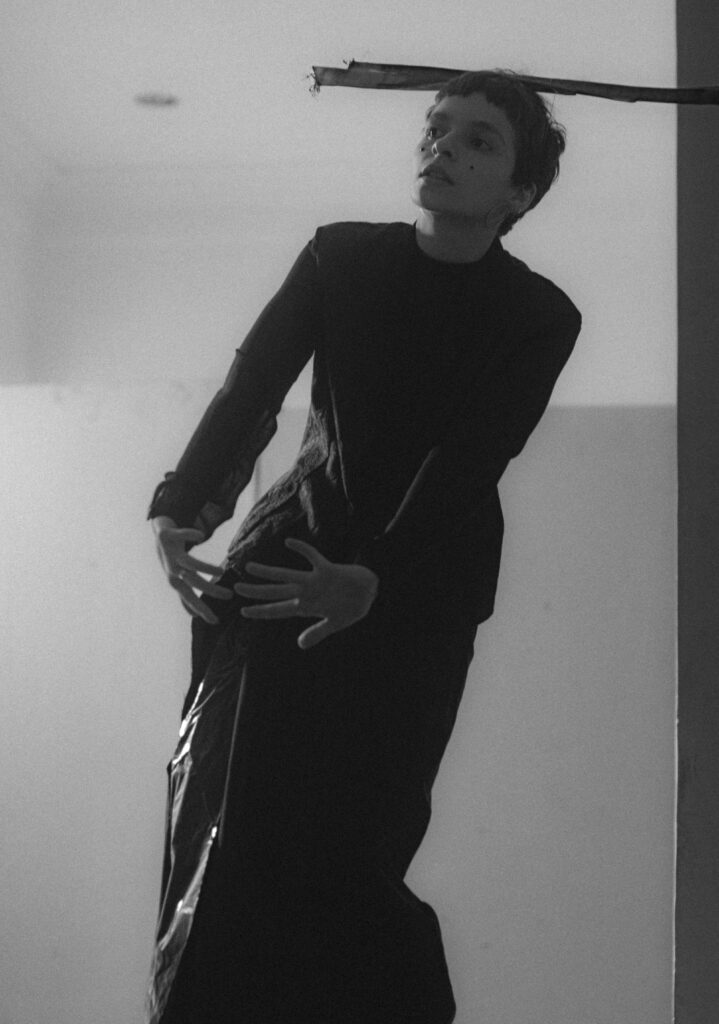
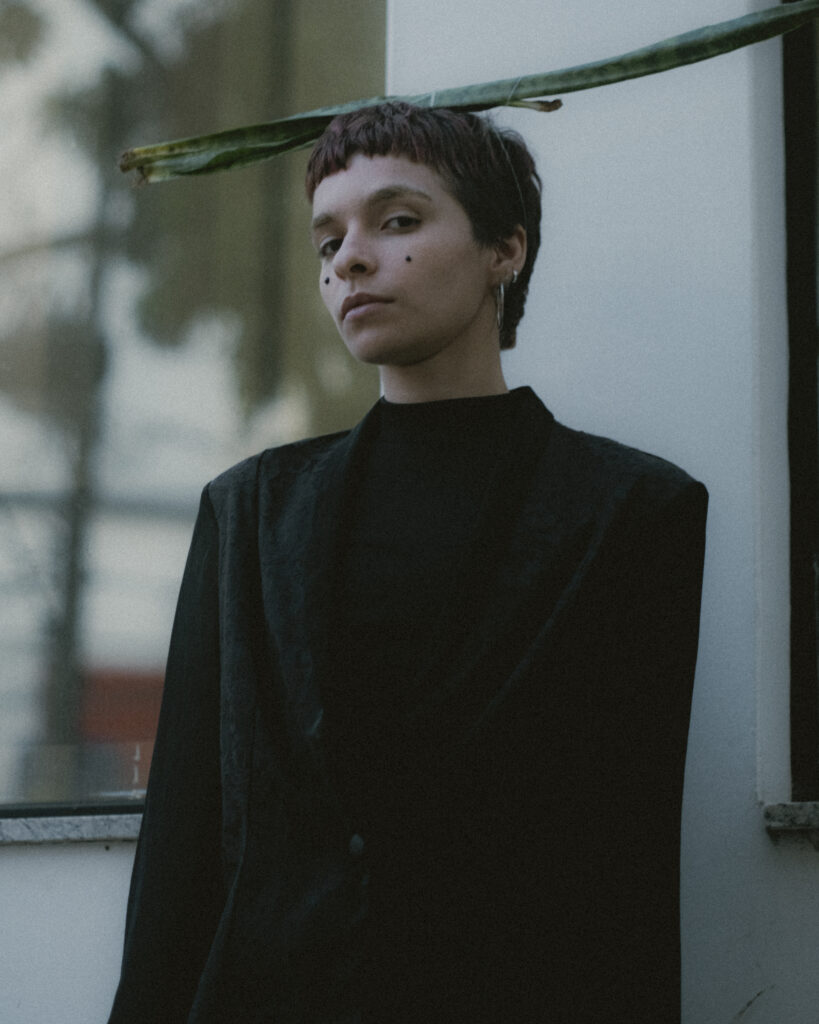
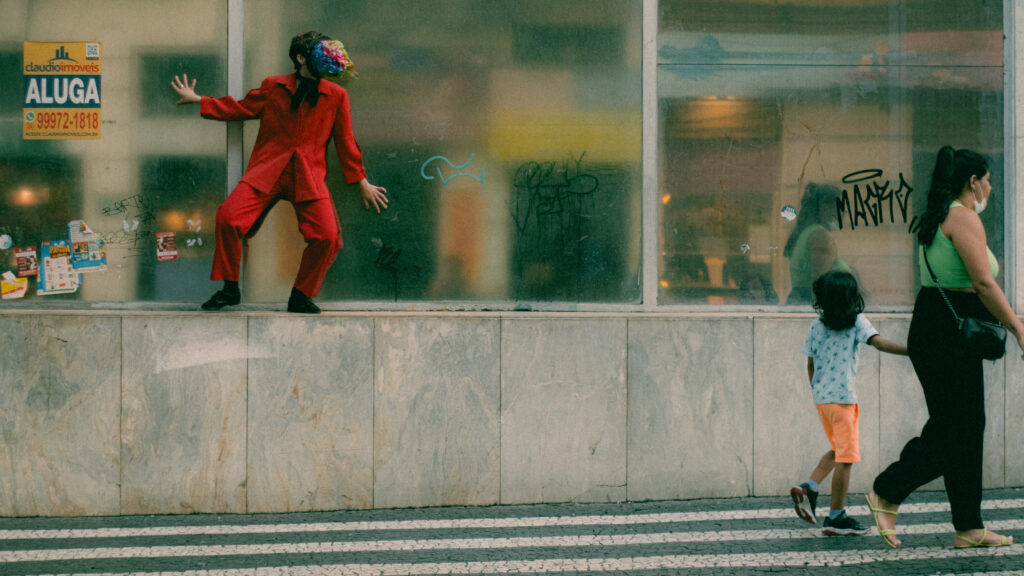
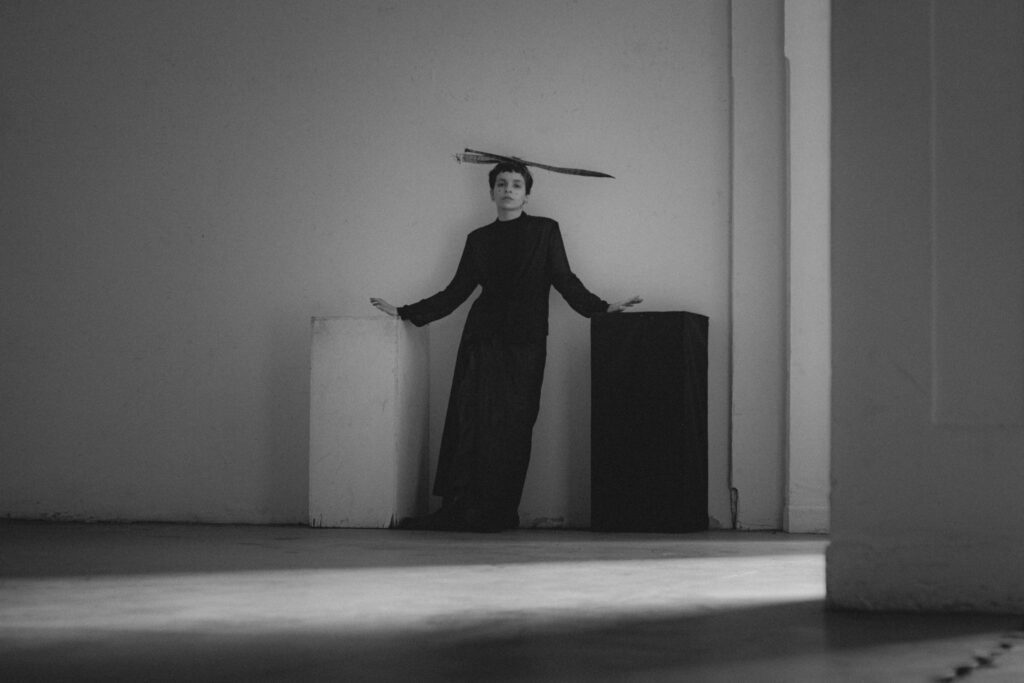
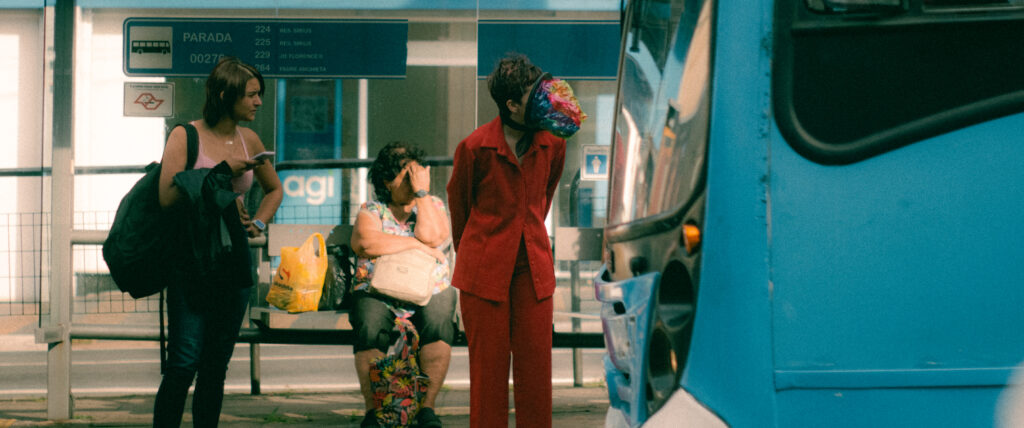
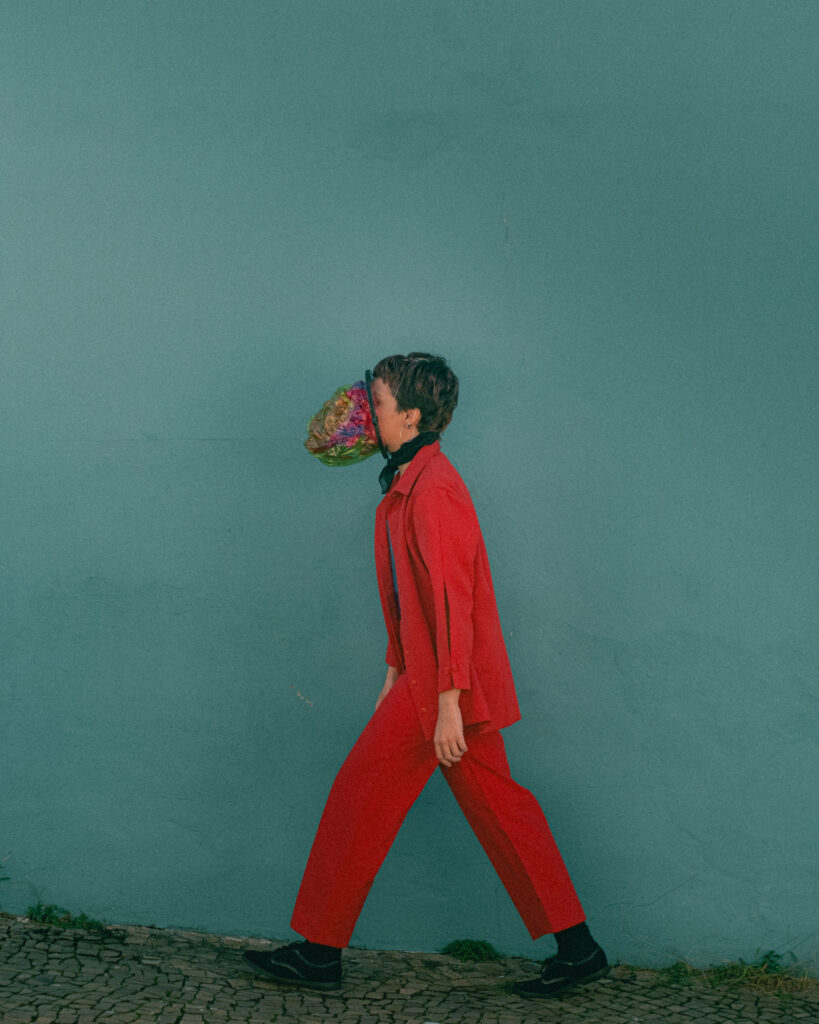
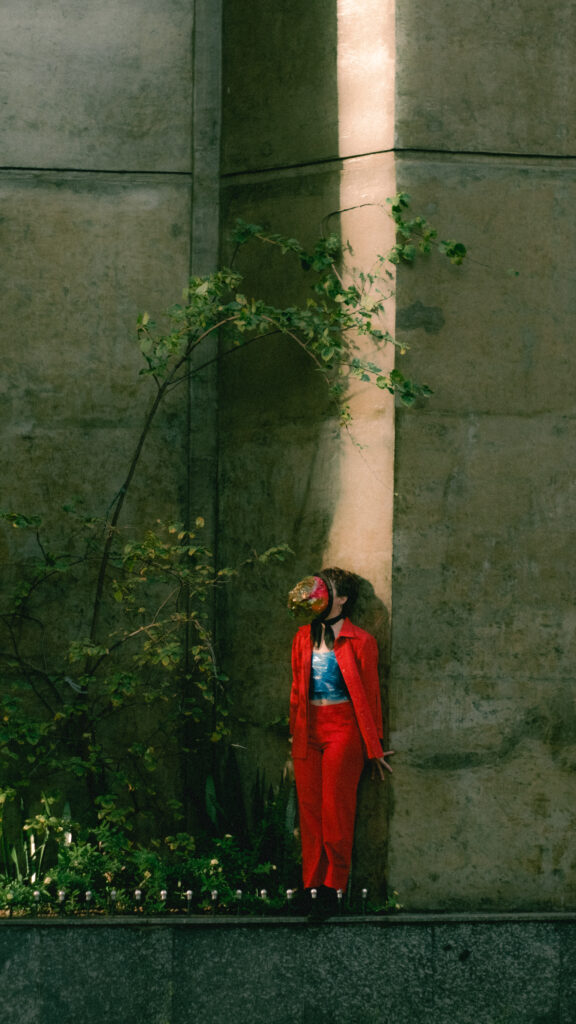
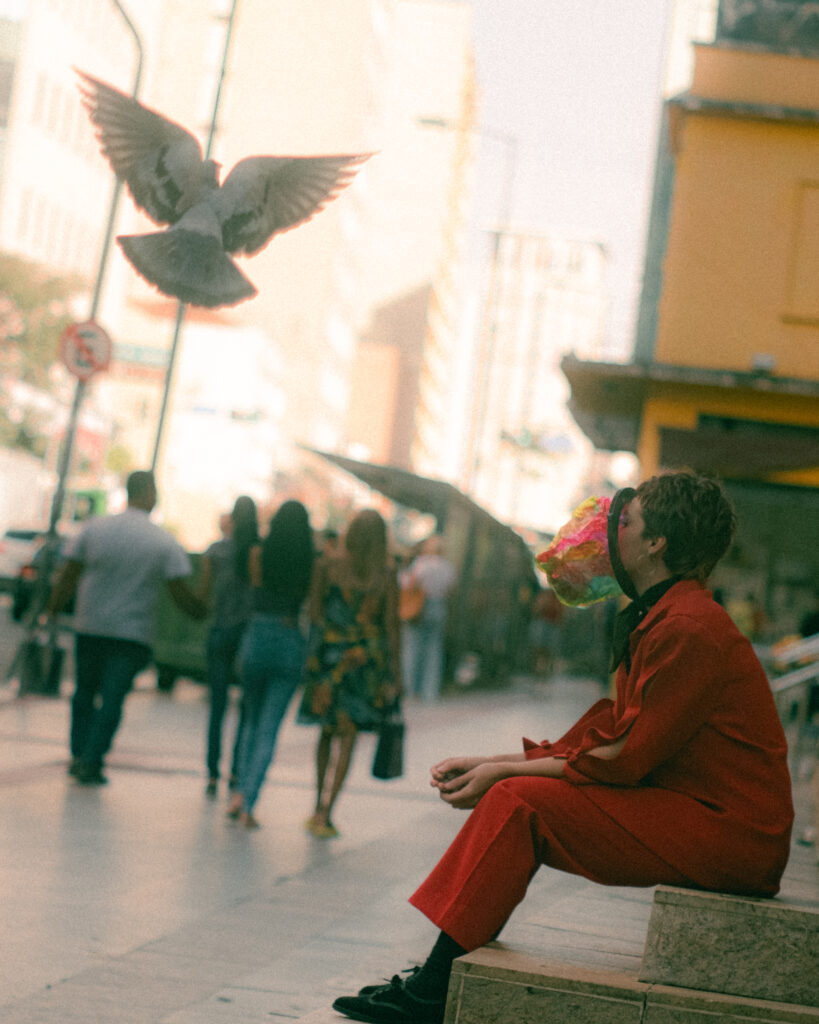
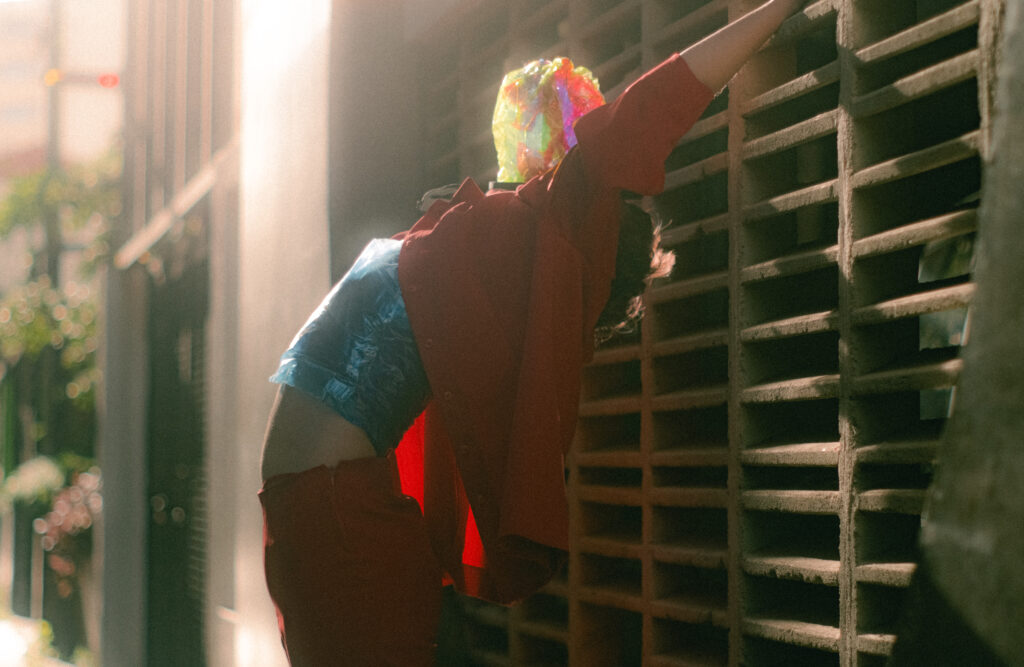
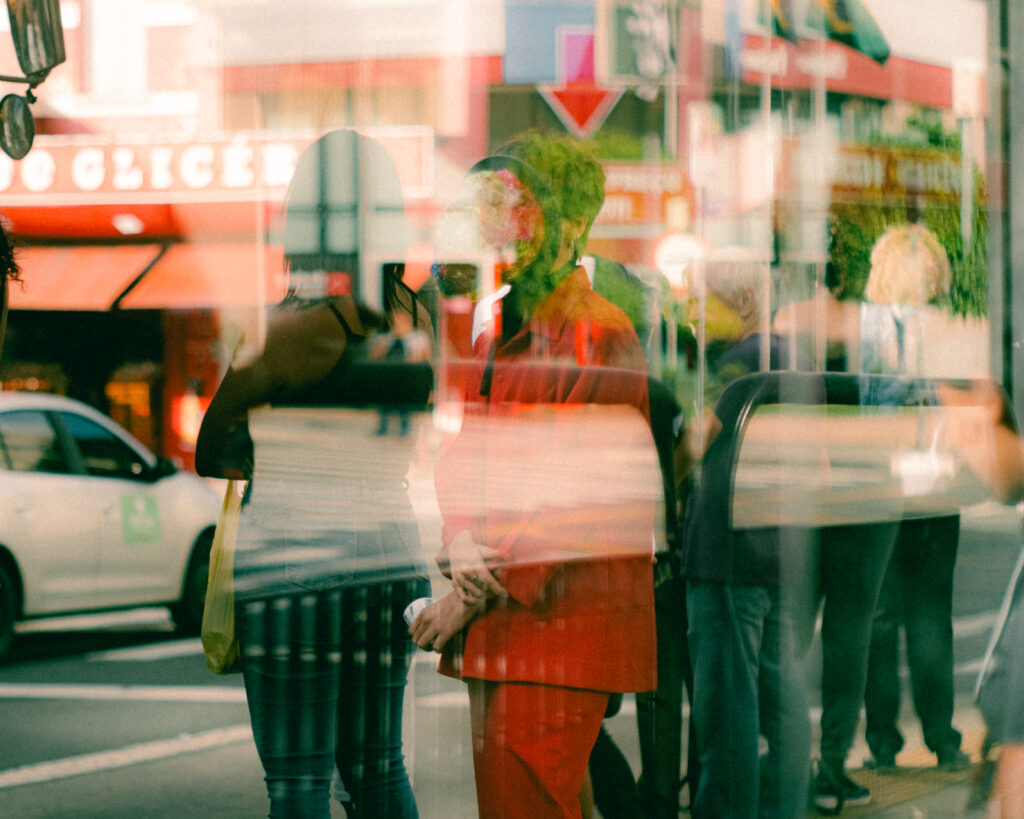
The mask I wore (and created) did, in fact, have a purpose: a dysfunctional filter through which to observe the world. Dysfunctional because that mask did not have an ideal system for breathing. It was suffocating to look at the world through that beautiful form, enriched by colors. At the same time, the colors of the mask were the colors of my clothing, as an extension of that way of perceiving the surroundings. The world of the senses, however, is not passive. Whether living or non‑living, the environment projects its own existence onto us, and we project back; if I see the world as x, I am part of the world that y sees. We are organism and landscape; and thus, to live any authenticity or difference is to project it into the world. That was the performance: somewhat satirical, a bit erratic, at times breathing deeply, claustrophobic and inert on a staircase, disturbing the landscape of others, sometimes playing at seeing what is not visible, planting chaotic moments into the flesh of the city. With this saturated posture in an environment that pretends to be stable — the large urban centers — I allowed myself to be guided, in a balance between being an individual and being a landscape, by Henrique’s lens, who suggested certain actions just as I suggested places for the recordings.
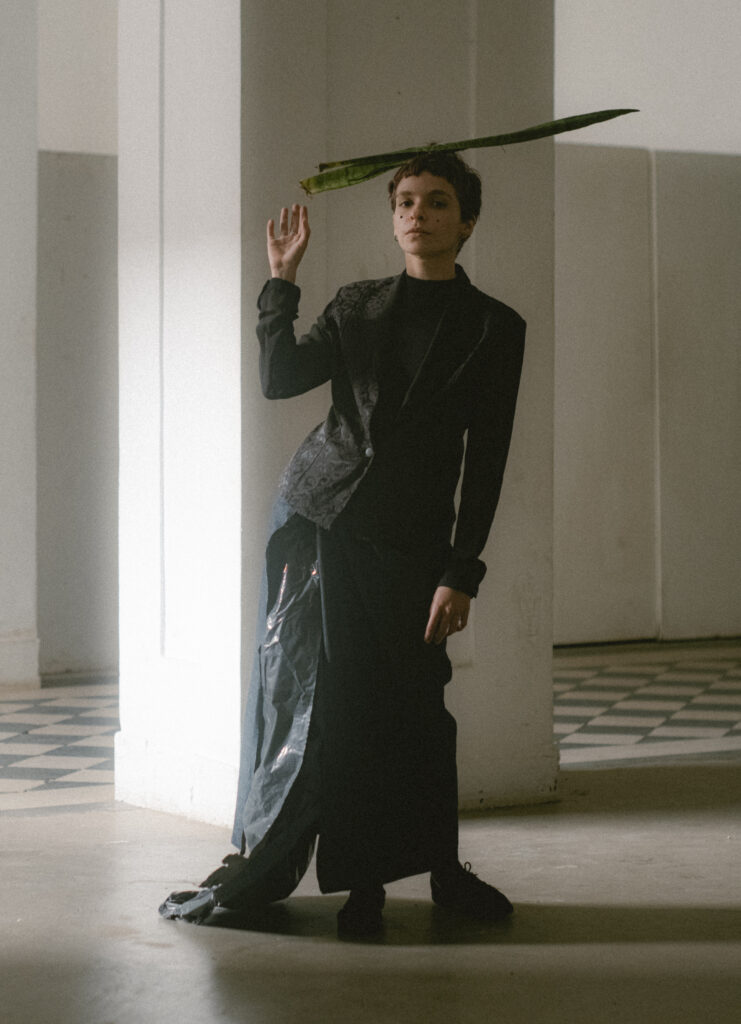
This exercise is important for dismantling some of the brutal norms of the urban environment, which restrict expression while demanding the worst expression of all: the collective silence in the face of systemic insufficiencies, saturated and amplified by the problems of cities, whether structural, cultural, administrative, related to services, and so on. It is for this reason that I continue to use the photos from that day in most of my communications, including in the book “O leão e o unicórnio”. These photos are the record of a specific kind of posture adopted by anyone who is maturing and coming to understand the value of the various forms of the arts and their textualities — or words — collectively.
Today, almost three years later, seeing the work Henrique set out to create, such as the documentary “O que podemos fazer?” from the MIS Cineclube (Museum of Image and Sound) in the city of Campinas — a documentary about the importance of critical awareness in cultural consumption and the participation of individuals, in whatever way is possible in each locality, toward a collective social change — and seeing the path I have been following with the series “Gestes” and with texts that align my interdisciplinary artistic poetics more closely with movements of social revolution, it makes even more sense to preserve this memory. We live in a historical moment in which every expression, whether local or with broader geographic reach, whether applicable or a theoretical proposition, all these uses of the power of words — spoken or unspoken — carry tremendous communal importance, not only for the present. Even if the moments captured are ephemeral, it is their records that allow the continuity and development of this conductive network that is the arts — without angels.
O que podemos fazer | Teaser do Documentário – YouTube
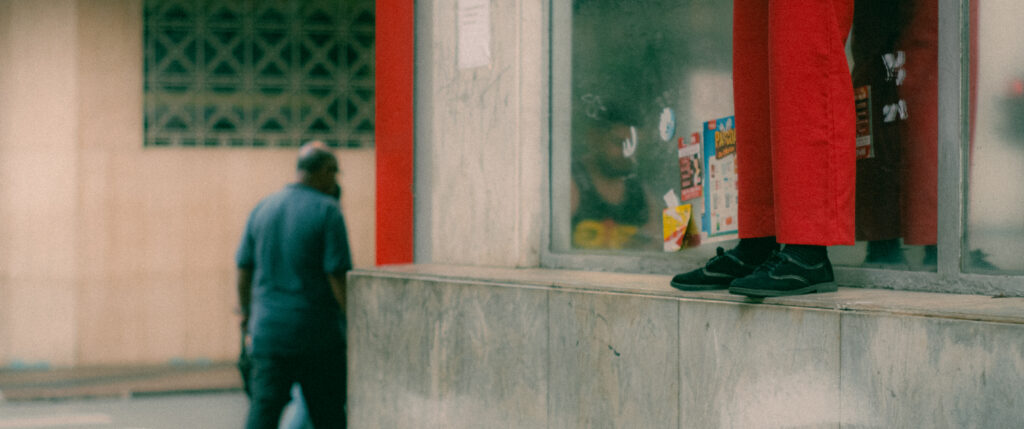
Below I will share a gallery of photographs from our fashion film in the series “Prologues for Organic Observations”. I apologize for my terrible French at the time. I chose to leave the videos interspersed with the text, as well as the pre‑sale information for the book, so that you can take in the images with the calm that these texts propose for each visual insertion shared with you. What I want to say about all this, in the end, is that we do not know which moments matter most within an idealized scale of an entire lifetime, and time is saturnine in delimiting the minimum distance required to observe any significance in our experiences: the distance from the present. As we walk and look back, or as our instruments of observation begin to find focus at different scales, new images take shape, new textualities emerge, and above all, new connections. It is about giving time for the roots to spread. Three years is nothing, but it is curious how I already understand, even minimally, that the step beside what was once the present already shows signs of importance for the micro‑habitat of my current moment, and perhaps for the near future.
Visit the work of Henrique Nakandakare (and I hope you will watch his documentary when it becomes available to the public) and, if possible, my Patreon, or refresh your memory with the new 2025 catalog, MIST. Additionally, if you would like a translation that is not in English only, please let me know directly or through our Publishing Instagram.
See you next time!
Be Good.
____________________________________________________________
Share this:

Would you like to receive the next post on your digital door?